

1. Why Talk About “Material” at All?
Color and pattern are what you see first,
but what your eyes actually feel all day long comes from the material and how the lens is built.
-
How much oxygen can reach your cornea (oxygen transmissibility, Dk/t)
-
How quickly the lens dries out or stays hydrated (water content and dehydration)
-
Whether pigments ever touch the eye directly or are fully sealed inside the lens
These are all decided by material + manufacturing method, not by the pretty color name on the box.
If you only look at shade and diameter, you’re really seeing just half the story.
1. 왜 ‘소재 이야기’를 꼭 해야 할까
컬러·패턴은 눈에 바로 보이지만,
실제로 눈 건강과 장시간 착용감은 무슨 재질로, 어떤 구조로 만들었는지가 좌우한다.
-
산소가 얼마나 잘 통과하는지(산소투과율, Dk/t)
-
물을 얼마나 머금고, 얼마나 빨리 말라버리는지(함수율·탈수)
-
색소가 눈과 직접 닿는지, 완전히 막혀 있는지
이 모든 게 “소재+제조 공법”에 달려 있기 때문에,
컬러렌즈를 논할 때 소재를 빼면 절반만 보는 셈이다.
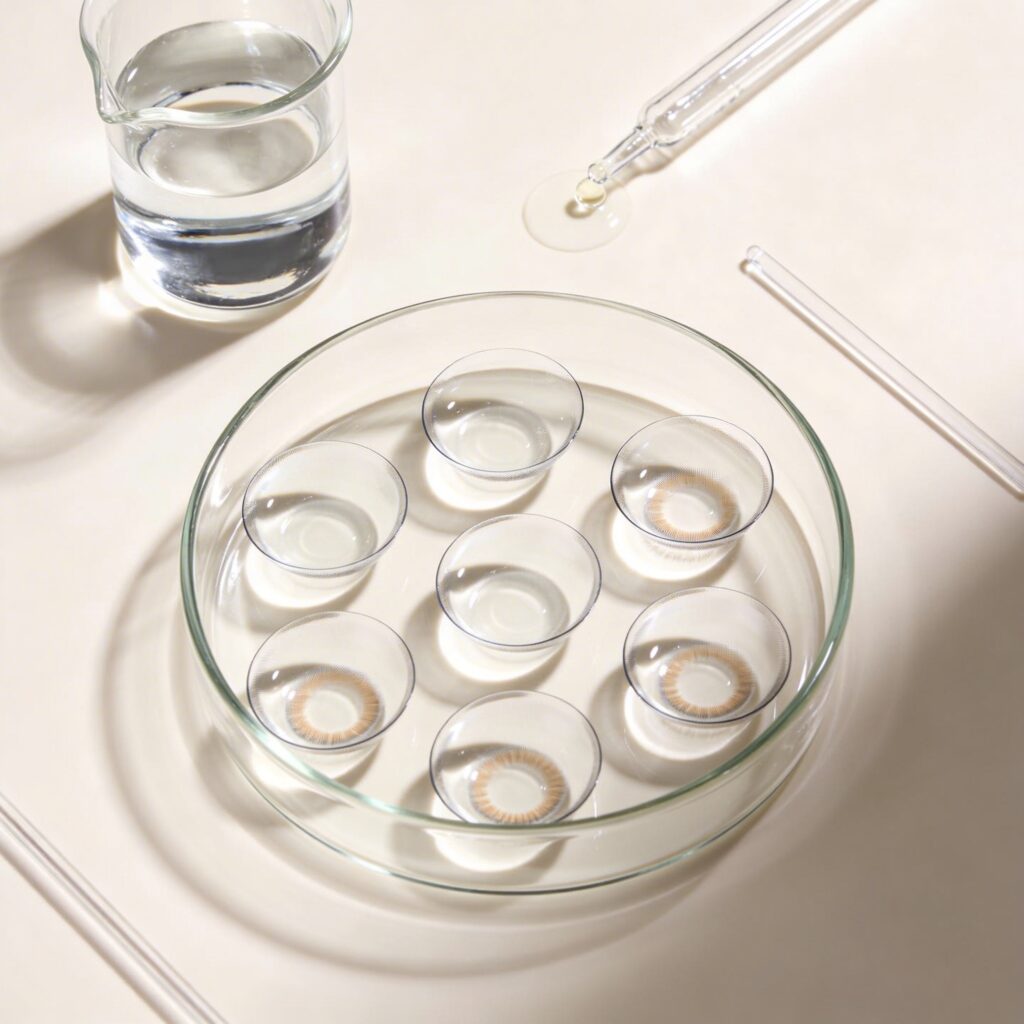
2. The Two Big Families: Hydrogel vs. Silicone Hydrogel
2.1 Hydrogel (HEMA-based): The “First-Gen” Soft Lens Material
Most classic soft lenses started with hydrogel materials, especially HEMA (poly-HEMA) and its copolymers.
-
HEMA is a hydrophilic plastic that absorbs water and forms a soft hydrogel with around 30–40% water content by itself.
-
By mixing HEMA with other monomers, manufacturers can push water content into the 50–80% range.
-
These materials are relatively inexpensive, biocompatible, and feel soft and comfortable from day one.
Hydrogel lenses rely on water as the pathway for oxygen:
more water → more dissolved oxygen → higher oxygen permeability.
But there’s a catch:
-
Higher water content also means the lens tends to dehydrate faster, especially in dry environments or with long wear.
-
Low- to mid-Dk hydrogels simply cannot deliver enough oxygen for extended or overnight wear, which is why they’ve historically been linked with hypoxia-related issues in some wearers.
In short, hydrogels are:
“Soft and comfy, but with built-in limits for oxygen and dryness, especially for long wear.”
2. 소프트 렌즈의 두 축: 하이드로젤 vs 실리콘 하이드로젤
2-1. 하이드로젤(HEMA 계열): 물로 숨 쉬는 소재
대부분의 전통적인 소프트 렌즈는 하이드로젤(Hydrogel), 특히 HEMA(폴리-HEMA) 계열에서 출발한다.
-
HEMA는 물을 잘 빨아들이는 친수성 플라스틱이라, 자체 함수율이 약 30~40% 수준.
-
다른 단량체(모노머)와 섞어 가공하면 50~80%까지 함수율을 올릴 수 있다.
-
이 재질은 부드럽고 초기에 착용감이 좋아서 지금도 많이 쓰인다.
하이드로젤에서 산소는 물을 타고 지나간다.
그래서 “함수율이 높을수록 산소투과율이 높다”는 공식이 성립한다.
하지만:
-
물이 많다는 건, 동시에 더 잘 마른다는 뜻이기도 하다.
-
고함수 렌즈는 눈물의 수분을 더 끌어와서, 특히 건조한 환경·장시간 착용 시 오히려 건조감을 키울 수 있다.
요약하면, 하이드로젤은
“부드럽고 착용감은 좋지만, 산소투과와 건조감에서 한계가 있는 1세대 소재”라고 보면 된다.
2.2 Silicone Hydrogel: Building an Oxygen Highway
To break through that oxygen ceiling, silicone hydrogel materials were developed.
-
Silicone components (siloxanes) dissolve and transmit oxygen extremely well,
so silicone hydrogels can reach much higher Dk than traditional hydrogels at similar or even lower water contents. -
Today, silicone hydrogels are the dominant soft lens material category globally, in large part because they dramatically reduce the risk of corneal hypoxia for daily and extended wear.
However, silicone has an inherent downside:
-
It is hydrophobic—it doesn’t like water—which can make the surface less wettable and more prone to comfort issues without extra engineering.
-
To fix this, manufacturers use surface treatments and hydrophilic comonomers (like HEMA, NVP, MAA, PEGMA) to create a water-loving surface while keeping high oxygen in the bulk material.
So silicone hydrogels are:
“Fantastic for oxygen and long wear, but heavily dependent on good surface chemistry for comfort and wettability.”
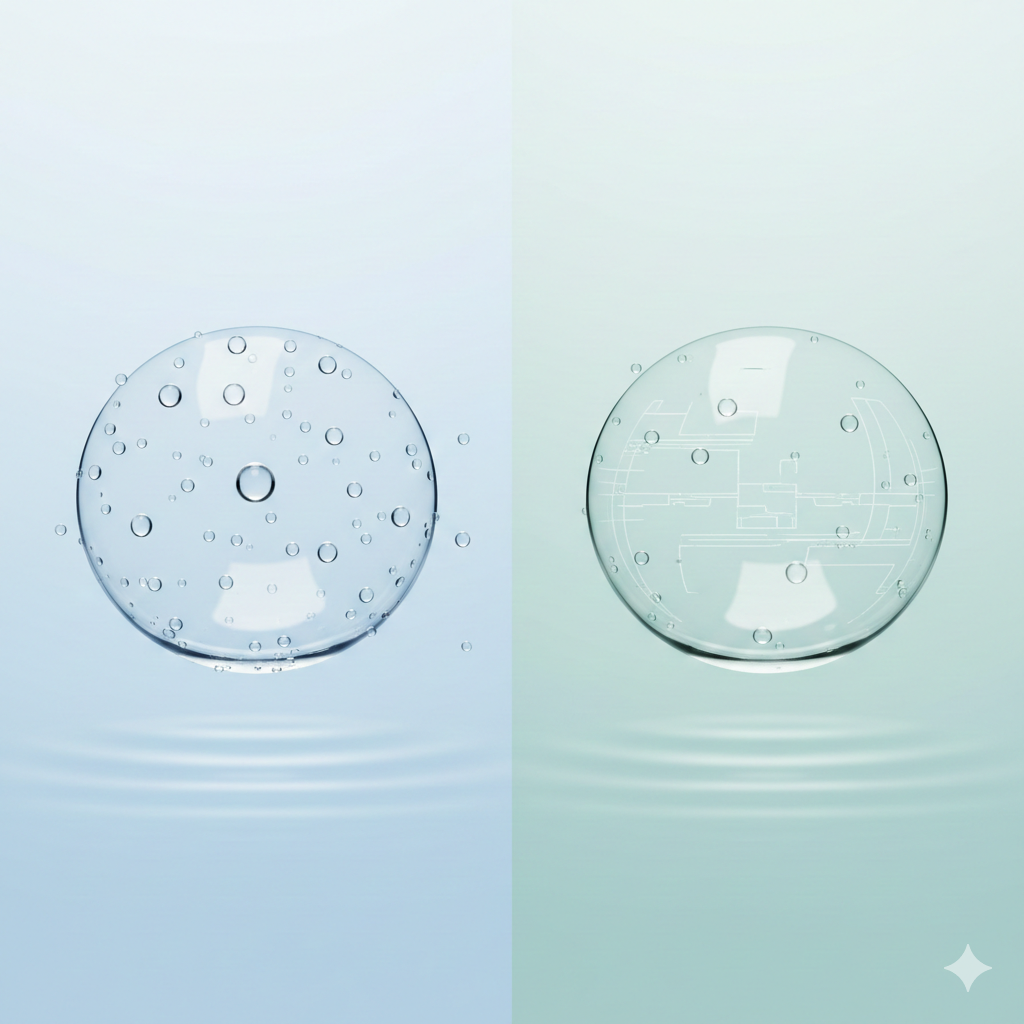
2-2. 실리콘 하이드로젤: 실리콘으로 산소 고속도로 뚫기
이 한계를 넘기 위해 등장한 게 실리콘 하이드로젤(Silicone Hydrogel)이다.
-
실리콘은 물이 아니라 실리콘 성분 자체로 산소를 잘 통과시키는 특성이 있어,
하이드로젤보다 훨씬 높은 산소투과율(Dk/t)을 낼 수 있다. -
연구들에 따르면, 하이드로젤은 수분 함량이 높을수록 Dk가 올라가지만,
실리콘 하이드로젤은 함수율과 무관하게 기본적으로 높은 Dk를 유지할 수 있다.
산소 측면에서는 실리콘 하이드로젤이 압도적이다.
실제 임상 리뷰에서도, 하이드로젤보다 실리콘 하이드로젤이 저산소증(각막 부종·신생혈관 등) 관련 리스크를 줄여준다고 정리한다.
다만:
-
실리콘은 소수성(물을 싫어함)이라, 표면이 그냥 두면 미끄럽거나 잘 젖지 않는다.
-
그래서 “표면 처리·코팅·친수성 모노머” 등으로 표면을 다시 물 좋아하는 상태로 만드는 기술이 중요하다.
정리하면, 실리콘 하이드로젤은
“장시간 착용·산소에는 강하지만, 표면 처리에 따라 착용감이 크게 갈리는 2세대 소재”다.
3. Water Content, Dryness, Oxygen: Clearing Up the Confusion
Water content on a box (e.g., 38%, 55%) tells you what percentage of the lens mass is water.
For hydrogels:
-
More water → more oxygen travels through the lens → better Dk, up to a point.
-
But high-water lenses can pull more moisture from the tear film and evaporate faster, which may worsen dryness in some eyes.
For silicone hydrogels:
-
Oxygen mostly travels through the silicone phase, not just through water,
so even lower-water silicone hydrogels can deliver high oxygen transmissibility.
This is why eye‑care professionals emphasize that:
-
“Higher water content” does not automatically mean “more comfortable” for dry-eye patients.
-
In fact, several clinical discussions suggest that low- to mid-water lenses can sometimes be better tolerated in dry or sensitive eyes than ultra high‑water hydrogels.
Bottom line:
Don’t treat water content like a “higher is always better” score.
You have to consider material type + your eye’s dryness profile together.
3. 함수율(물 함량), 건조감, 산소 – 헷갈리는 관계 정리
박스나 상세페이지에서 늘 보이는 ‘함수율 38%·55%…’는 렌즈 무게 중 물이 차지하는 비율이다.
-
하이드로젤:
-
물이 많을수록 산소도 더 잘 통과 → 고함수 = 산소에 유리.
-
하지만 동시에 물을 더 많이 증발시키기 때문에, 고함수 렌즈가 오히려 더 쉽게 말라서 건조감을 줄 수 있다.
-
-
실리콘 하이드로젤:
-
산소는 실리콘 경로로도 가기 때문에, 함수율이 낮아도 산소 공급이 충분한 경우가 많다.
-
오해 포인트는 여기다:
-
“눈이 건조하니까 물 많이 든 고함수 렌즈를 껴야지?” →
실제 연구·안과 자료들을 보면, 건조한 눈에는 오히려 저함수 렌즈가 더 편한 경우도 많다고 설명한다.
즉, 함수율 숫자만 보고 “높을수록 무조건 좋다”고 보기는 어렵고,
소재 타입(하이드로젤 vs 실리콘 하이드로젤) + 내 눈 상태를 같이 봐야 한다.
4. For Colored Lenses, Where the Pigment Lives Is Everything
Color doesn’t have to change the base material, but it does change how the lens is built.
Where the pigment goes in the lens structure strongly affects safety, thickness, and comfort.
4.1 Older Methods: Surface Printing
Early generations of cosmetic lenses sometimes used surface-printed pigments.
-
Pigment was applied near or on the outer surface of the lens.
-
Over time, abrasion or wear could expose pigment directly to the eyelid or cornea, raising safety concerns.
Because of this, pure surface‑print systems are now viewed as outdated, and modern safety standards strongly favor fully encapsulated pigment designs.
4.2 Modern Standard: Sandwich Coloring Technology
Most reputable colored lenses today use a “sandwich structure”: the pigment is sealed between two clear layers of lens material.
-
The color layer is locked inside the lens, so it never touches the eye directly.
-
This is especially important because inorganic pigments (using iron oxides, titanium dioxide, etc.) are not meant to be in direct contact with ocular tissue.
-
A side effect: the lens can be slightly thicker than a clear lens, which some wearers may notice as extra “presence” or dryness if the fit or material is not ideal.
Korean and global patents around sandwich coloring focus on improving:
-
pigment stability,
-
pattern crispness, and
-
ensuring the colored part cannot migrate to the surface.
If a brand explicitly mentions “sandwich” or “wrap-in” color technology, that’s a good sign the pigment is properly encapsulated.
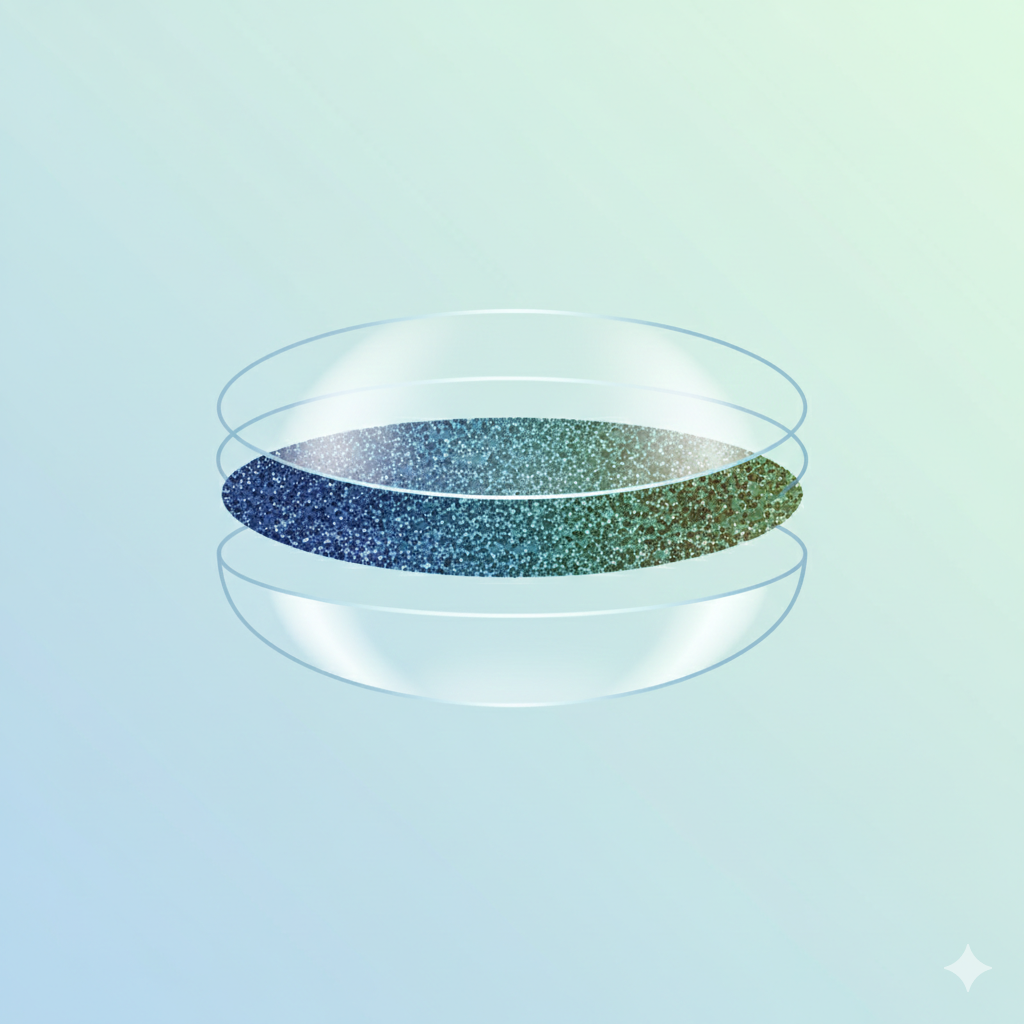
4. 컬러렌즈의 핵심: 색소를 어디에, 어떻게 넣었나
색이 들어간다고 해서 소재가 완전히 달라지는 건 아니지만,
색을 어디에 배치하느냐에 따라 안전성과 두께, 착용감이 크게 달라진다.
4-1. 옛날 방식: 표면 프린트(드라이 프린트)
초기 컬러렌즈는 렌즈 표면에 염료를 직접 프린트하는 방식이 많았다.
-
색소층이 눈과 거의 직접 맞닿기 때문에,
마모·탈색 시 색소가 눈에 노출될 위험이 있었다. -
제조는 쉽고 저렴하지만, 이런 이유로 지금은 대부분 퇴출된 방식으로 취급된다.
4-2. 지금의 주류: 샌드위치 구조
현재 안전한 컬러렌즈의 키워드는 샌드위치 구조(Sandwich Coloring Technology)다.
-
투명 렌즈 재질 두 겹 사이에 색소층을 끼워 넣어,
색소가 눈·눈꺼풀에 직접 닿지 않도록 봉인하는 구조. -
색소에는 티타늄·철 등 금속 성분이 포함될 수 있기 때문에,
이걸 완전히 내부에 가둬놓는 게 특히 중요하다고 여러 자료에서 강조한다. -
대신 색소층이 끼어 들어가면서, 다른 방식보다 렌즈가 약간 더 두꺼워질 수 있고, 그만큼 건조감이나 이물감을 느끼는 사람도 일부 있다.
한국 제조사 특허(예: 네오비전의 컬러 코팅 샌드위치 공법)도 이런 구조를 바탕으로,
색 유지력·앞뒷면 구분 등을 개선하는 방향으로 발전해 왔다.
5. Matching Material Choice to Real-Life Wear
Translating all this into actual choices:
5.1 “I Wear Lenses 8–10 Hours a Day, Almost Every Day”
-
For full-time wearers (office workers, students at screens all day),
silicone hydrogel daily or frequent‑replacement lenses are usually recommended from an oxygen standpoint. -
If you’re sensitive to silicone’s feel, newer low‑modulus silicone hydrogels and refined surface treatments are designed specifically to reduce that stiff, “plasticky” sensation.
5.2 “I Only Wear Colored Lenses on Special Days, for a Few Hours”
-
For occasional, short wear (events, nights out), a well‑designed hydrogel color lens can be perfectly reasonable.
-
In this case, prioritize:
-
Encapsulated pigment (sandwich structure)
-
Proper fit (BC/diameter)
-
Replacement schedule you can realistically keep clean (daily vs monthly).
-
5.3 “My Eyes Are Naturally Dry and Sensitive”
-
High-water hydrogels are not automatically your friend; they may dehydrate and draw more water from your tears.
-
You might do better with:
-
Lower- to mid-water hydrogels, or
-
Silicone hydrogels with strong wetting technology or hydrophilic surface coatings.
-
-
In all cases, if you have chronic dryness, deciding between materials is best done with an optometrist/ophthalmologist who can evaluate your tear film and cornea.
5. 내 라이프스타일 기준으로 소재를 고른다면
소재 이야기를 실사용에 바로 연결해 보면:
5-1. “하루 8–10시간 이상, 거의 매일 낀다”
-
장시간 착용, 특히 사무직·학생처럼 모니터 앞에 오래 있으면
실리콘 하이드로젤 원데이/정기교체 렌즈가 산소 공급 면에서 유리하다. -
다만 실리콘 특유의 표면감이 안 맞는다면,
-
고함수 하이드로젤 대신
-
중·저함수 하이드로젤 + 보습 성분 강화형도 고려할 수 있다.
-
5-2. “컬러렌즈는 약속 있는 날만, 짧게 낀다”
-
착용 시간이 짧다면, 잘 설계된 하이드로젤 컬러렌즈도 충분히 옵션이 될 수 있다.
-
이때 포인트는
-
샌드위치 구조 등 색소 봉인 방식,
-
본인 눈에 맞는 곡률(BC)·지름,
-
관리 난이도(원데이 vs 먼슬리) 쪽에 더 신경 쓰는 것.
-
5-3. “원래 눈이 많이 건조하다, 인공눈물 자주 쓴다”
-
단순히 “물 많은 렌즈”가 답이 아닐 수 있다.
-
고함수 하이드로젤은 오히려 눈물의 물을 더 끌어당겨 건조감을 키울 수 있다는 보고들이 있다.
-
이런 경우
-
저함수 하이드로젤이나
-
표면 친수성 코팅이 잘 된 실리콘 하이드로젤을,
-
안과·안경원 상담과 함께 선택하는 편이 더 안전하다.
-
6. Four Things to Check on Any New Lens Box or Page
Next time you check a product detail page or box, look specifically for:
-
Material Type
-
Is it Hydrogel? Silicone Hydrogel? Which base monomers are used?
-
For all‑day, everyday wear, silicone hydrogel typically gives a safer oxygen margin.
-
-
Water Content
-
Don’t read this as “higher = better.”
-
For hydrogels, more water often means more oxygen but also more dehydration risk.
-
For silicone hydrogels, oxygen is less tied to water %, so mid‑water levels can be ideal.
-
-
Replacement Schedule
-
Daily disposables reduce buildup and cleaning issues even if the material is similar.
-
Monthly lenses demand strict hygiene; any dehydration or deposit problem is multiplied over 30 days.
-
-
Pigment Structure (for color lenses)
-
Look for terms like “sandwich coloring,” “wrap-in pigment,” or “pigment fully encapsulated”.
-
Avoid options where pigment appears to be on the surface or where the brand gives no structural information at all.
-
These four checks alone can prevent many “It’s pretty but my eyes hate it” situations.
6. 신제품 스펙 볼 때, 최소한 이 4가지는 보자
박스나 상세페이지를 볼 때, 소재 관점에서 보면 좋은 체크포인트:
-
재질 타입
-
Hydrogel(HEMA계인지), Silicone Hydrogel인지 명시.
-
장시간 착용·잠잘 때 착용은 원칙적으로 피하되, 최소한 산소 면에서는 실리콘 하이드로젤이 유리하다는 정도는 알고 선택.
-
-
함수율(물 함량)
-
숫자가 높다고 무조건 좋은 게 아니라,
-
“하이드로젤 고함수 = 산소↑, 건조 리스크↑” 구조를 염두에 두기.
-
-
착용 주기(원데이/정기교체)
-
같은 소재라도,
-
원데이는 매일 새 렌즈라 침착·세척 스트레스↓,
-
먼슬리는 관리 난이도와 위생 리스크가 훨씬 크다.
-
-
-
색소 구조
-
‘샌드위치 구조’, ‘pigment enclosed’, ‘wrap-in’ 등
색소가 눈에 직접 닿지 않는 방식인지를 꼭 확인.
-
이 네 가지만 봐도,
“예뻐서 샀다가 눈이 너무 아픈데 이유를 모르겠다”는 상황을 줄일 수 있다.
